
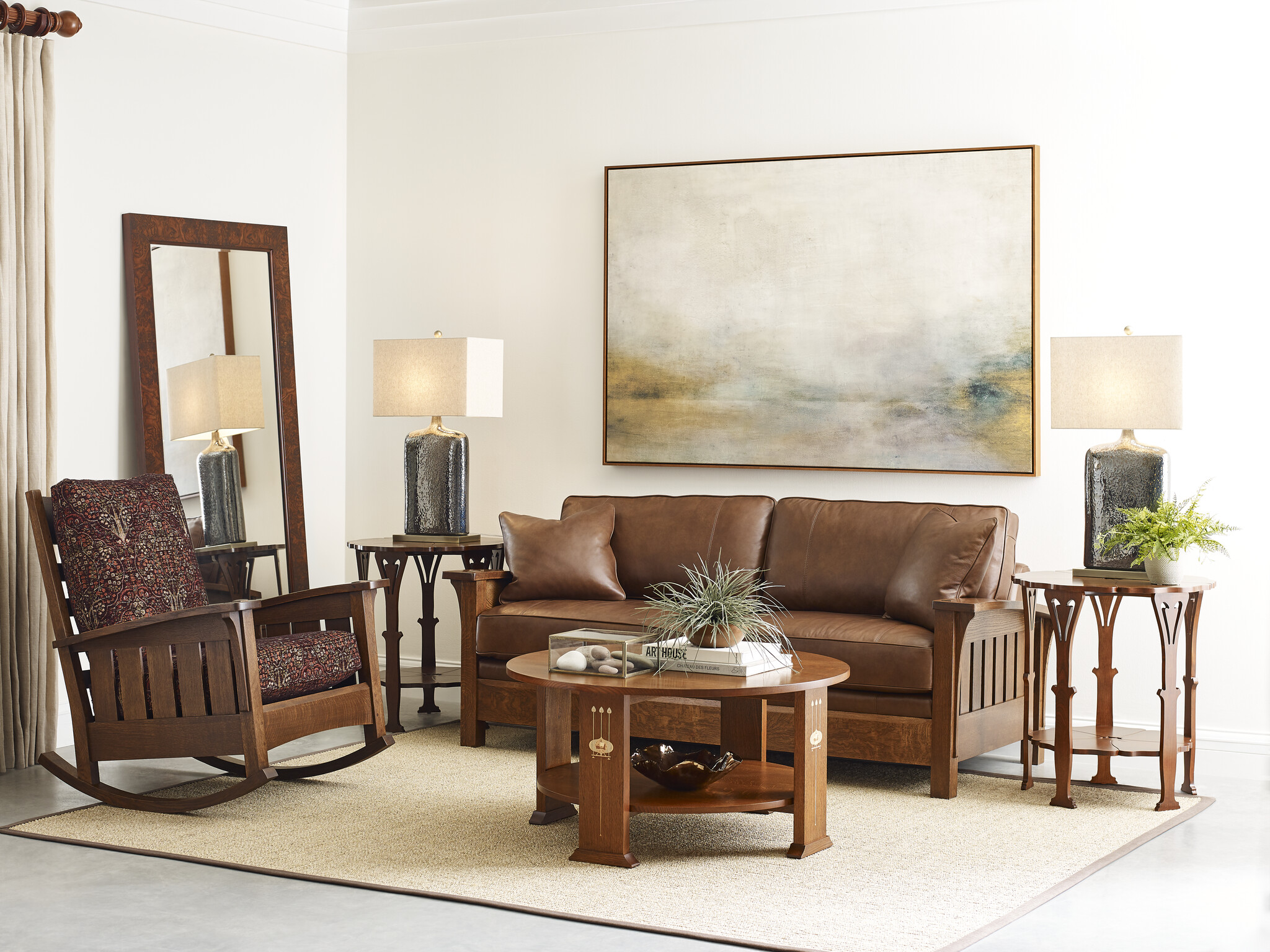
Designing a Warm Living Room with Mission Furniture: Cozy, Timeless Comfort
Posted by Mission Motif on Nov 7th 2025
A warm living room begins with furniture that balances craftsmanship, comfort, and authenticity. Mission-style furniture brings all three, combining solid hardwood frames with designs that feel grounded and timeless. The result is a space that feels as welcoming as it is enduring.
At The Mission Motif, furniture transforms living rooms into true gathering places. Each handcrafted sofa, chair, and table connects beauty with purpose, built to last while offering comfort that deepens over time.
In this guide, you’ll learn how to design a living room that radiates warmth—through thoughtful layouts, rich wood tones, and details that celebrate the enduring spirit of Mission craftsmanship.
Understanding Mission Furniture Style
Mission furniture has this inviting, grounded look—simple, sturdy, and all about craftsmanship. It’s got clean lines, solid wood, and a kind of timelessness that works in all sorts of homes. If you understand where the style comes from and what makes it tick, it’s easier to pick pieces that really add comfort and character to your living room.
Key Characteristics of Mission Furniture
Mission furniture stands out for its straight, simple lines and strong build. There’s not a lot of fancy decoration—just functional design and honest materials. You’ll see flat panels, vertical slats, and a structured, clean feel.
Builders use mortise-and-tenon joinery instead of nails or screws, making each piece strong enough to stick around for generations. The style celebrates the natural grain of the wood, skipping heavy stains or coverings.
The History and Origins of Mission Design
Mission style popped up in the early 1900s in the U.S., right in the middle of the Arts & Crafts movement. It took inspiration from the simple, handmade furniture in California’s Spanish missions. Instead of the fussy, ornate Victorian stuff, Mission style focused on clean, sturdy forms that could stand the test of time.
Gustav Stickley was a big name here—he championed solid wood furniture that really highlighted craftsmanship and authenticity. That history gives Mission furniture its lasting appeal and a real connection to American roots.
The Cultural Influence of the Arts & Crafts Movement
Mission furniture grew from the broader Arts & Crafts movement, which valued integrity, simplicity, and skilled workmanship. This philosophy reacted against mass production, celebrating the artistry of local makers and honest materials.
According to The Metropolitan Museum of Art, the movement reflected “a moral and aesthetic vision of craft” that sought beauty in useful, hand-built objects—principles still evident in today’s Mission furniture.
Common Materials and Finishes Used
Solid hardwood is at the heart of Mission furniture—oak is the classic pick for its toughness and grain, though you’ll see cherry and maple now and then. Most pieces get a natural or clear finish to show off the wood.
Finishes are usually matte or satin, never glossy, keeping things warm and approachable. Hardware’s kept simple too—think black or bronze metal that adds to the sturdy look. When you bring in Mission pieces, you’re getting furniture that’s made to age gracefully.
Planning a Warm Living Room Layout
A warm living room with Mission furniture calls for a layout that’s both practical and cozy. You want a space that works for how you live but still feels inviting. That means thinking carefully about where furniture goes and how people will use the room.
Balancing Functionality and Comfort
Think about what you actually do in your living room. Mission sofas and chairs, made from solid hardwood, are comfortable and built for real life. Place them where you’ll use them most.
Keep walkways open—don’t cram too many big pieces in. Sofas and chairs with clean lines and sturdy frames keep things functional and relaxed. Toss in some cushions or a throw for extra comfort. That way, your Mission furniture stays the heart of everyday living without losing style.
Creating Inviting Seating Arrangements
Set up seating so it naturally encourages conversation. Mission sofas and loveseats look great facing each other or grouped around a coffee table. It just makes people want to sit and chat.
Add a recliner or Morris chair for variety. Mixing up the sizes and heights keeps things interesting but still cozy. Give yourself about 18 to 24 inches between pieces so people can move easily. This setup keeps the space neat and welcoming without feeling too stiff.
Incorporating Open and Cozy Spaces
You want your living room to feel open but still have those cozy corners. Use Mission furniture to carve out little zones, like a reading nook with a comfy chair by the window.
Leave some open floor so the space breathes and gets good light. But group furniture is close enough to build a sense of warmth and connection.
A textured rug under the seating area grounds the space and softens things up. Mission-style lamps or chandeliers add gentle light, making it all feel even cozier. This mix of open areas and snug clusters keeps your living room both practical and inviting.
Choosing the Right Mission Furniture Pieces
Picking Mission furniture is all about finding pieces that blend solid craftsmanship with classic style. Stick to the essentials—seating, tables, storage—that define your living room’s look and comfort. Each item should bring together function, comfort, and that unmistakable Mission woodwork.
Sofas and Armchairs Selection
Start with a sofa or armchair in solid hardwood—oak or cherry are tried and true. These pieces are built to last. Look for wide, flat arms and straight lines that show off the wood grain. Don’t skimp on comfort. Good cushions and upholstery matter.
If you want to kick back, check out recliners or a Morris chair—they give you support and that classic Mission vibe. Size matters too. A big sofa can anchor the room, while matching armchairs add balance and extra seats. You can always tweak finishes or fabrics to fit your style.
Mission Coffee Tables and Side Tables
Mission-style tables are both practical and good-looking. Go for thick legs and visible joinery—you want people to notice the craftsmanship. Quarter-sawn white oak or brown maple tables have a warm, natural look.
They’re up to the task for daily use, whether you’re stacking books or setting down coffee mugs. Think about where you’ll put them. A low coffee table works in front of the sofa, and side tables fit next to chairs. Pick shapes that suit your room—rectangular, round, whatever feels right.
Entertainment Centers and Cabinets
Mission-style entertainment centers and cabinets offer storage and keep the look clean. Stick to solid wood and classic Stickley-inspired lines. Pick cabinets with enough shelves and drawers for your electronics and media.
Straight panels and simple brass or iron hardware keep the Craftsman feel alive.
These pieces help organize the space and tie the room together. Make sure they fit your TV and match the warm wood tones of your other Mission furniture. Custom options are out there if you need something just right.
Color Palettes for a Cozy Atmosphere
The right colors can make your living room feel warm and comfortable. Earth tones, thoughtful accents, and well-chosen fabrics will show off your Mission furniture’s wood and classic design.
Warm Earth Tones and Natural Hues
Stick with nature-inspired shades—deep browns, soft tans, muted greens, warm beiges. These colors echo the hardwoods in Mission furniture and give your space a grounded, peaceful vibe.
Taupe or champagne walls work well—they let your furniture shine. For flooring, go for natural wood or low-sheen tiles in similar warm tones for a pulled-together look. Earth tones highlight the craftsmanship and make your Mission pieces the stars of the room.
Accent Colors to Complement Mission Furniture
Once you’ve got your base, add accent colors for depth. Deep reds, burnt orange, muted gold—they all look great with Mission’s strong lines. Bring in these shades with rugs, pillows, or art.
A hand-knotted rug in rich reds and gold can wake up the space without breaking the Arts & Crafts mood. Skip super-bright or neon colors; they just don’t fit. If you want something cooler, try subtle blues or olive greens—still warm, still classic.
Coordinating Fabrics and Upholstery
Go for natural, touchable fabrics—cotton twill, linen, fine wool—in colors that work with your walls and accents. Leather’s a solid choice too. Caramel or deep brown leather on a loveseat pairs perfectly with hardwood frames and adds a cozy feel.
Patterns should be simple—think geometric or floral motifs inspired by Arts & Crafts, but keep them small so they don’t fight with the furniture. Custom upholstery lets you fine-tune the look and keep things feeling authentic and inviting.
Lighting Your Mission-Style Living Room
Lighting really shapes the mood and shows off your Mission furniture. Picking the right fixtures and layering your lighting brings out the craftsmanship and natural beauty in your space.
Selecting Mission-Style Lighting Fixtures
Choose lighting that matches the clean lines and solid build of your furniture. Fixtures in brass, iron, or bronze—often with frosted or cut glass shades—fit right in with the Mission vibe. Chandeliers and pendants with adjustable chains let you set the height just right.
Wall sconces are handy for saving space and giving off a warm glow. Suppose you can, go for pieces made in the USA with that same attention to detail as your furniture. It just feels more cohesive and intentional.
Layering Ambient, Task, and Accent Lighting
Mix up your lighting for a cozy, functional space. Ambient light comes from ceiling fixtures or chandeliers and gives the room its base glow. Task lighting is for reading or chatting—floor lamps or table lamps near your seating let you control the brightness.
Accent lighting highlights art, architectural features, or the details in your Mission furniture. Wall sconces or small spotlights add depth and keep things interesting. With this layered approach, you can change the mood and really let your Mission pieces shine.
Accessorizing for Warmth and Style
The right textiles and wall accents can make your living room feel extra cozy. Layering rugs, pillows, and throws adds color and comfort. Thoughtful wall art and decor help show off your furniture’s craftsmanship.
Textiles: Rugs, Pillows, and Throws
Start with a quality hand-knotted wool rug in earth tones or muted greens. These rugs feel great underfoot and play up the wood tones in Stickley Mission furniture. Classic geometric or Arts & Crafts patterns fit right in.
Pile on plush pillows in linen or cotton—pick colors that echo your rug or furniture, like burnt orange, deep red, or forest green. Wool or cotton throws add warmth and texture.
Layering these textiles makes your living room a spot you actually want to relax in. They just feel right with solid oak and a simple design.
Wall Art and Decorative Objects
Go for wall art that nods to Mission style’s roots. Simple lines, natural materials, handcrafted details—they all add warmth. Framed prints from the early 20th century or nature scenes in earthy colors work well.
Decorative touches like pottery, bronze sculptures, or wood carvings match the furniture’s craftsmanship. Avoid anything too shiny or ultra-modern; it just doesn’t fit.
Wall sconces with Craftsman-inspired designs give off soft light and highlight your furniture, especially in hallways or smaller spaces. Stick with pieces that feel intentional and timeless. That’s how your living room really feels comfortable and stylish.
Blending Mission with Modern Comforts
A warm living room with Mission furniture is all about mixing classic, handcrafted pieces with today’s needs. You want a space that honors tradition but still fits your daily life. A few smart choices keep your Mission furnishings both beautiful and practical.
Integrating Technology Seamlessly
Bringing tech into a Mission-style living room shouldn’t mess with its cozy, timeless feel. Pick tech that blends in—like a flat-screen TV framed simply or tucked into a hardwood cabinet. That way, you get the function without losing the handcrafted look.
Try wireless speakers hidden in wooden cabinets, or lamps with USB ports that match your Mission lighting. Little details like these keep things modern without adding clutter. Smart lighting’s another option—pick warm bulbs and control them by app or voice to highlight your furniture’s wood tones.
Mixing Mission and Contemporary Decor
Blending Mission furniture with contemporary decor is all about mixing rustic charm and modern simplicity. Try pairing a solid wood Stickley sofa or loveseat with a modern area rug—think simple patterns, neutral tones.
That little bit of contrast? It keeps things interesting but still feels right together. Soft textiles or subtle geometric shapes can lighten up the heavier wood. Minimal metal or glass—maybe a sleek coffee table—brings a bit of brightness without fighting Mission’s natural vibe.
If you keep your colors warm and earthy, the space will stay welcoming, just as Mission furniture intends.
|
Mission Furniture |
Contemporary Elements |
Why It Works |
|
Solid hardwood |
Sleek glass or metal accents |
Balances warmth with lightness |
|
Crafted details |
Clean lines and simple patterns |
Adds freshness without clutter |
|
Rich wood tones |
Neutral textiles and rugs |
Maintains a cozy, inviting look |
Caring for Mission Furniture
Mission furniture doesn’t need fussy care, but a little attention goes a long way. Take care of both the wood and the upholstery, and your pieces will age beautifully—maybe even outlast you.
Maintenance Tips for Wood Surfaces
Dust your solid hardwood Mission furniture often with a soft, dry cloth. Skip water and harsh cleaners—moisture can mess up the finish before you know it.
Use a good-quality furniture polish made for wood. Don’t go overboard; polishing every few months is plenty, or you’ll get buildup. Try to keep your furniture out of direct sunlight and away from big swings in temperature. Wood cracks and fades faster than you’d think.
Coasters and mats under hot or wet stuff? Absolutely. They help prevent those annoying stains and rings. And if you do get a scratch, a gentle sanding and a dab of touch-up stain usually does the trick.
Upholstery Care and Fabric Protection
Vacuum upholstered Mission furniture with a brush attachment now and then to keep dust from settling in. If there’s a spill, blot—don’t rub—with a clean, dry cloth. Rubbing just spreads the mess or roughs up the fabric.
A fabric protector for natural fibers can help guard against stains and wear, but always try it on a hidden spot first. Not every product plays nice with every fabric. If your upholstery comes off, a professional cleaning every few years keeps things fresh and oils and dirt from building up.
Final Touches for Inviting Living Spaces
When you’re finishing your living room, details matter. Toss on a few textured throw pillows or a soft blanket in earth tones. It’s a simple way to boost comfort and show off the wood’s rich finish. Lighting makes a huge difference.
Craftsman-style lamps or sconces—especially those with a nod to the Arts & Crafts movement—give off a warm glow and show off your furniture’s details. Layer in a hand-knotted rug if you can. It adds color and warmth underfoot, tying the room together.
Natural fibers and Mission-inspired patterns? Always a good choice. Small accents—think pottery, maybe a framed vintage print—add personality. Just keep it simple and meaningful, so the room stays calm and timeless.
|
Final Touch Suggestions |
Why It Works |
|
Textured pillows |
Adds softness and color contrast |
|
Craftsman lighting |
Enhances ambiance and style |
|
Hand-knotted rugs |
Grounds furniture adds warmth |
|
Simple decor accents |
Personalizes without clutter |
Each piece should respect the craftsmanship of your Mission furniture. The right accessories make your living room feel welcoming, not crowded—let the key pieces shine.
Bring Timeless Mission Warmth Into Your Home
Designing a warm living room with Mission furniture is about more than style — it’s about connection. Each handcrafted piece brings lasting comfort, grounding your space in the honesty and strength of solid wood craftsmanship.
At The Mission Motif, we honor this tradition by helping homeowners design spaces that feel as authentic as they are inviting. Every sofa, table, and lamp reflects a century-old commitment to artistry and endurance.
Visit our Atlanta showroom to discover how Mission furniture can transform your living room into a haven of warmth, comfort, and timeless design.
Frequently Asked Questions
What color palette complements Craftsman-style interiors?
Earthy colors—warm browns, deep greens, muted golds—work naturally with Mission furniture. Soft creams or warm grays help lighten things up but keep the warmth. These shades highlight the wood’s grain and keep the room feeling cozy and grounded.
How can I incorporate modern elements into a living room with mission-style furniture?
Mix in metal or glass accents—lamps, picture frames, a coffee table top—with your wood furniture. Stick to simple designs for the modern pieces; let your Mission stuff be the star. Neutral rugs and minimal decor help keep everything balanced.
What are the best lighting options for a warm and inviting Craftsman-style living room?
Look for fixtures in bronze, copper, or aged iron. Mission-style lighting usually has straight lines and amber glass, which gives off a soft, welcoming glow. Layer overhead lights with table and floor lamps so you can control the mood.
What types of textiles work best to enhance the coziness of a living room with Mission furniture?
Natural fabrics—wool, cotton, linen—soften up the solid wood. Hand-knotted rugs, woven throws, and simple patterned cushions in warm shades all add texture without stealing the show from your furniture.
How can I maximize space in a small living room with Mission-style pieces?
Choose pieces with slim lines and open legs to make the room feel bigger. Multi-functional furniture—like a storage ottoman or bench—helps a lot. Arrange your seating so there are clear walkways, and don’t cram the space.
What should I consider when choosing decor to accompany mission-style furniture in my living room?
Go for decorations that feel simple and genuine—think handmade pottery, maybe a painting or two with some nature vibes, or even a stack of old books that’s seen better days. Skip the flashy or super ornate stuff; it just doesn’t vibe with the whole Craftsman thing.
It’s really about picking pieces that feel real and have a bit of soul, so they actually work with your furniture instead of fighting it.