
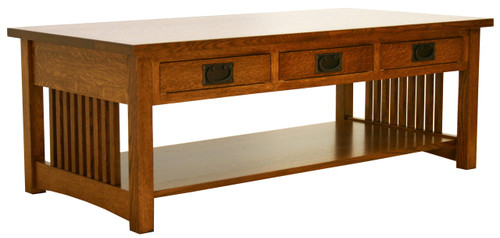
American Made Solid Hardwood Furniture Benefits
Posted by Mission Motif on Jun 1st 2026
Choosing furniture is, at its core, a decision about how long you want something to last. When you compare a solid hardwood piece built in an American or Amish shop to a mass-produced alternative, the difference is clear.
This difference shows up in every joint, every drawer pull, and every decade of daily use. Real wood furniture outlasts veneer over particleboard in both appearance and durability.
The benefits of American made solid hardwood furniture reach beyond patriotic preference. They are grounded in material science and joinery tradition. Investing in a piece built to this standard means buying furniture built to outlast you.
Replacing furniture every seven to ten years costs more over a lifetime than a single high-quality purchase. This article walks through construction details, wood species, and performance traits that explain why that investment holds.
What Sets Solid Hardwood Apart From Look-Alike Furniture
Solid hardwood construction differs from veneer and particleboard alternatives in grain stability and repairability. A finished solid wood piece carries character that only improves with age.
Composite materials begin to degrade when humidity or wear reaches the substrate. American made solid wood furniture maintains its structural integrity even in changing environments.
Solid Hardwood Construction vs Veneer and Particleboard
Real wood furniture built from solid hardwood stock carries consistent grain from face to core. Veneer pieces apply a thin decorative layer over a particleboard or MDF substrate.
That substrate is sensitive to moisture. Once it swells or crumbles at a corner, there is no practical repair available. This is a common issue with imported furniture built for the mass market.
Particleboard also holds fasteners poorly. Screws driven into it strip out under repeated stress. Solid hardwood furniture holds fasteners with enough strength to be disassembled and reassembled over decades.
Why Real Wood Furniture Ages Better
Solid wood surfaces can be sanded and refinished. A scratch that would be permanent on a veneer piece can be addressed on quartersawn white oak or cherry. Light abrasion and a fresh coat of finish restore the piece.
That repairability makes a solid hardwood table a 50-year piece rather than a 10-year piece. Wood also responds to its environment in a stable, predictable way when properly kiln-dried.
Quartersawn lumber shows tighter, more consistent grain. According to the USDA Forest Products Laboratory wood handbook, quartersawing reduces shrinkage and cupping relative to flat-sawn or plain-sawn lumber.
How Natural Wood Grain Affects Character and Repairability
Natural wood grain gives each piece a visual identity that no two boards share. In craftsman and Mission furniture, that grain is part of the design language. It is visible through a clear or lightly tinted finish.
Quartersawn white oak shows medullary rays as silver fleck that becomes more pronounced with age. Cherry deepens from pale blond to rich amber over time. This makes older pieces genuinely more beautiful than new ones.
The Construction Details That Explain the Higher Price
The price difference between solid hardwood and its mass-produced counterpart is explained by joinery. Mortise-and-tenon frames and dovetail joinery require skill and time.
These techniques do not appear in staple-and-glue assembly used for cheap imported furniture. Higher material and labor costs result in a product that lasts for generations.
Mortise-and-Tenon Strength in Frames and Bases
Mortise-and-tenon joinery cuts a rectangular tenon that fits into a receiving mortise. This joint has been used in furniture construction for thousands of years.
It distributes stress across a wide glue surface rather than concentrating it at a single fastener. As noted in the Metropolitan Museum of Art's Craftsman furniture documentation, exposed joints were both structural and beautiful.
A chair frame built with mortise-and-tenon joints will remain tight under years of use. The same frame built with dowels and staples begins to loosen as soon as the glue fatigues.
Dovetail Joinery in Drawers and Case Pieces
Drawer boxes reveal construction quality faster than almost any other test. A dovetail joint interlocks two members with a mechanical connection that resists pulling apart.
When you see the interlocking fingers of a dovetail, it signals that the builder expected thousands of uses. Stapled drawer boxes with a thin-ply bottom often perform adequately only when new.
Under sustained daily use, staples pull and the bottom sags. Eventually, the drawer face separates from the box. This failure is rare in solid hardwood construction using traditional joinery.
Why Staple-and-Glue Assembly Fails Sooner
Staple-and-glue assembly is fast and inexpensive, which is why it dominates mass-produced furniture. The staple holds the piece while the glue sets.
Once the glue cures, the staple becomes redundant. When the glue joint fails under stress, there is no structural backup. Solid hardwood pieces built with mechanical joints carry redundancy.
Even if the glue loosens with age, the joint geometry still holds the piece together. This allows for simple repairs rather than replacement.
Why American-Made Solid Hardwood Furniture Holds Its Value
Furniture made in the USA and Amish-crafted furniture prioritize material quality over production speed. Both share an economic logic regarding lifetime cost.
A piece that lasts 60 years costs far less per year than one replaced every decade.
Furniture Made in the USA and Quality Control
American made solid wood furniture typically passes through fewer hands between the sawmill and the finished piece. This means better accountability at each stage of production.
Lumber grading, moisture content, and finish application can all be monitored by the same shop. That continuity reduces the tolerance drift found in long international supply chains.
When you buy furniture made in the USA, you also have a direct channel to the manufacturer. This matters for a piece you expect to own for 30 years or more.
Amish Furniture and Small-Shop Craft Traditions
Amish-crafted furniture comes from workshop traditions that treat hand-fit joinery as standard practice. Amish cabinet shops typically use solid domestic hardwoods.
They cut their own mortises and tenons and hand-sand profiles that a production line would skip. The result is furniture with a tactile quality you notice immediately.
Mission furniture built in this tradition measures quality in decades, emphasizing structural joints and natural wood grain.
Cost Over Time vs Replace-and-Repeat Buying
Consider a solid hardwood dining table priced at $3,500 and expected to last 50 years. That works out to only $70 per year of ownership.
A mass-produced alternative at $600, replaced every eight years, costs $75 per year. This cycle also produces a landfill outcome at each stage.
The math supports the investment in American hardwood pieces. It does not even account for the value of owning a piece you genuinely appreciate every day.
How Wood Species Influence Stability, Wear, and Appearance
American hardwood species differ in hardness and how they respond to finish. Choosing the right species for a specific application is essential for longevity.
American Hardwood Choices Such as Oak, Cherry, and Maple
|
Species |
Janka Hardness |
Best Use |
Character |
|---|---|---|---|
|
White Oak (quartersawn) |
1,360 lbf |
Tables, case pieces, beds |
Silver ray fleck, stable grain |
|
Cherry |
950 lbf |
Bedroom, case pieces |
Warm amber patina over time |
|
Hard Maple |
1,450 lbf |
High-traffic surfaces |
Close grain, takes stain evenly |
|
Brown Maple |
950 lbf |
Painted or lightly stained pieces |
Subtle figure, cost-effective |
Quartersawn white oak suits Mission designs because its ray fleck reads as integral ornament. Cherry works well in bedrooms where warmth and depth of color are priorities.
Why Grain Density and Cut Matter for Daily Use
Plain-sawn lumber exposes the widest grain face, which moves more with humidity changes. Quartersawn and rift-sawn lumber expose the edge grain.
This grain is denser, more wear-resistant, and significantly more dimensionally stable. For tabletops, that stability keeps joints tight and surfaces flat through seasonal cycles.
Matching Wood Character to a Craftsman or Mission Interior
Matching species in your furniture creates visual continuity that feels like intentional design. Cherry or walnut can work as accent species against an oak ground.
The key is choosing a finish that lets the grain speak. A clear oil finish or a lightly pigmented stain enhances rather than obscures the natural wood grain.
Where the Benefits Show Up Most in Everyday Rooms
Solid hardwood construction pays its largest dividends in pieces that take daily stress. This includes dining chairs, drawer boxes, and bed frames.
Dining Furniture That Stays Square and Steady
A dining table with mortise-and-tenon apron joints will stay square under lateral stress. Stickley dining room furniture built with through-tenon stretchers has a distinct physical presence.
There is no wobble, no flex, and no creak. Dining chairs are the most mechanically stressed pieces in any home and require the strongest possible joints.
A chair frame relying on staples will loosen within a few years. Mortise-and-tenon rail-to-post joints hold that force without fatigue for decades.
Solid Wood Bed and Platform Bed Construction
A solid wood bed or platform bed built from thick oak or cherry stock absorbs movement easily. It does not transmit noise or flex through the frame.
The solid hardwood bedroom collections at Mission Motif include pieces built with thick posts and solid wood slat systems. These designs do not require a box spring to perform well.
A high-quality platform bed or solid wood bed becomes a focal point in the room. The grain and finish quality of American hardwood reads clearly from across the space.
Storage Pieces Built for Daily Drawer Use
The selection of American made solid wood furniture includes case pieces with dovetail drawer boxes. These can tolerate 20 pulls a day without the drawer face loosening.
Solid wood dressers and nightstands with dovetail construction close with a smooth deceleration you can feel from the first pull.
Making the Investment With Confidence
Buying custom handcrafted furniture built to last requires asking the right questions before you commit. Understanding when customization adds genuine value helps you choose pieces that will serve your home for generations.
What to Inspect Before You Buy
Before purchasing a solid hardwood piece, look at the drawer construction first. Then check the following:
- Drawer joinery — dovetails indicate quality; staples and glue blocks indicate production-line shortcuts
- Exposed tenon caps — these confirm the joinery is structural, not decorative
- Wood species consistency — grain and color should be uniform across all visible surfaces
- Finish depth — a well-applied catalyzed lacquer feels smooth with tactile depth; a thin spray coat feels almost like plastic
When Customization Is Worth It
Custom wood species and stain choices are worth the lead time for handcrafted furniture that anchors a room. Specifying a finish that matches existing trim creates a cohesive interior.
Choosing quartersawn white oak over brown maple is a decision that impacts both appearance and durability. These choices transform a furniture purchase into a lasting investment.
Custom upholstery on dining chair seats allows you to match textiles in the room. These decisions are the mechanism by which furniture becomes part of your home's story.
Choosing Pieces Meant to Last for Generations
Heirloom furniture is built with the expectation that it will outlive its first owner. This expectation drives every choice from lumber grade to final hand-sanding.
When you buy a piece with that standard, you are not buying a product with a limited lifespan. You are acquiring something that gains meaning and character with every year of use.
Frequently Asked Questions
The questions below address the practical details that matter most when you are deciding between solid hardwood and mass-produced alternatives.
How Can You Tell Solid Hardwood Construction From Veneer or Composite in a Finished Piece?
Look at the edges and undersides of the piece. Solid hardwood shows continuous grain around corners without a visible seam between a face layer and a substrate. You can also knock gently on a flat surface: solid wood produces a dense, muted tone; particleboard sounds hollow. Drawer sides built from solid wood are a reliable secondary indicator.
What Joinery Details Like Mortise-and-Tenon or Dovetails Signal Long-Term Strength in Casegoods?
Mortise-and-tenon joints on frame corners and dovetail joints on drawer boxes indicate that the builder expected the piece to absorb years of mechanical stress without fastener failure. These joints are time-consuming to cut, so their presence is a reliable signal of construction priority. Exposed tenon caps on Mission and craftsman pieces confirm the joint is structural, not decorative.
Why Do Quartersawn White Oak and Rift-Sawn Lumber Stay Flatter Than Plain-Sawn Boards?
Quartersawing orients the growth rings perpendicular to the face of the board. That orientation means seasonal moisture movement runs along the thickness of the board rather than across its width, which dramatically reduces cupping and warping over time. For wide tabletops and case sides, that stability difference keeps glue joints tight and surfaces flat across years of humidity cycling.
How Does a U.S.-Made Finish System Hold Up to Heat, Water Rings, and Daily Cleaning?
A properly applied catalyzed lacquer or conversion varnish, common in American furniture production, cures to a hard film that resists water rings, mild heat, and everyday cleaning with a damp cloth. Oil-and-wax finishes offer less surface protection but are easier to spot-repair. Either system outperforms the thin spray coats common on imported mass-produced pieces, which tend to show rings and scratches within the first year of use.
What Should You Expect to Pay for Solid Hardwood Furniture When the Lumber, Build, and Finish Are Domestic?
A solid hardwood dining table built in an American or Amish shop typically starts around $2,500 and scales upward with species, size, and customization. Bedroom sets and case pieces range similarly. The price reflects lumber cost, joinery labor, and finish quality, none of which are present in mass-produced alternatives. Viewed over a 30- to 50-year ownership period, the per-year cost is almost always lower than replace-and-repeat buying.
Which Maintenance Steps Actually Protect Solid Wood Surfaces Without Softening the Finish or Attracting Dust?
For catalyzed lacquer or conversion varnish finishes, a dry or barely damp microfiber cloth handles daily cleaning without softening the film. Avoid silicone-based polish products, which build up over time and create a hazy surface that is difficult to refinish. For oil-finished pieces, a periodic application of a compatible furniture oil restores surface depth without adding a soft, dust-attracting layer.
Making the Right Choice for Your Home
Solid hardwood furniture built in American and Amish shops is a fundamentally different category than mass-market options. It uses different materials, joinery, and longevity expectations.
When you invest in a piece with mortise-and-tenon joints, you are making a decision supported by craftsmanship. The initial price is higher, but the ownership experience is significantly better.
If you are furnishing a home and want pieces built by American and Amish artisans to last generations, Mission Motif is ready to help. Visit the Atlanta showroom at 747 Miami Circle NE, or call 404-370-1505 to discuss wood species and stain options.