
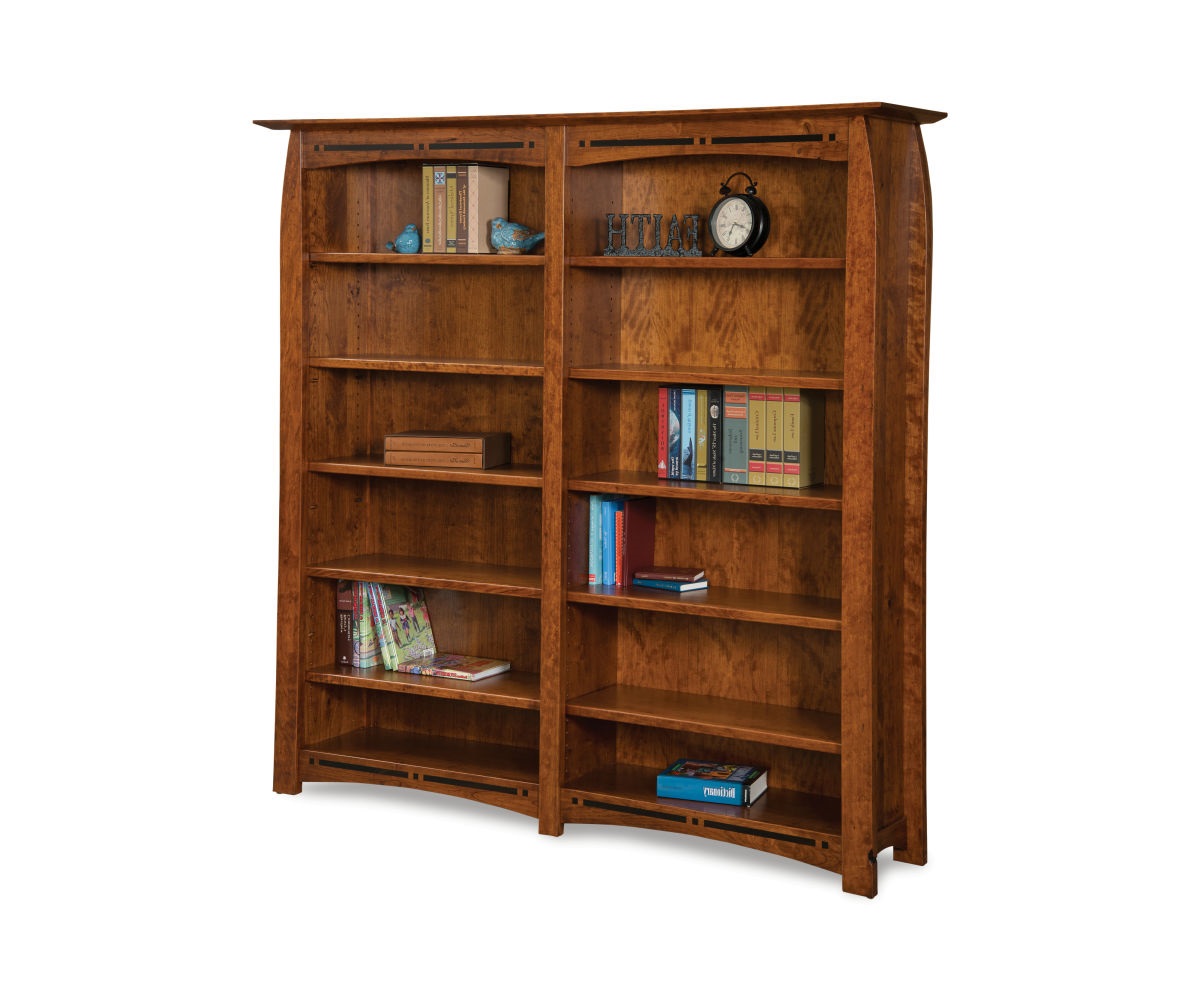
Mission-Style Bookcase Reading Nook: Solid Wood Choices That Hold Up
Posted by Mission Motif on Jul 24th 2026
A corner, an alcove, or a stretch of wall could become the best seat in the house. Building a mission-style bookcase reading nook around solid hardwood shelving changes everything.
It is the difference between a spot that looks nice for a season and one your family reaches for every evening. The decision starts not with paint chips or throw pillows, but with the wood species, joinery, and shelf layout of the bookcase itself.
The homeowners who get this right tend to work with specialists who want every piece in a reading nook to share a unified finish and construction standard. That kind of consistency requires choosing materials and custom options early, not after the chair arrives.
Keep reading to learn how to select a mission bookcase built for daily use and pair it with the right armchair and lighting. You will also see how to plan custom finishes well ahead of a 14 to 16 week build window.
You will leave this guide knowing which wood cuts resist warping and which joints outlast stapled casework. You will also know how to layer rugs and light so the nook feels complete from day one.
Choose the Bookcase First
A mission style bookcase anchors your reading nook more than any other single piece. Its height, depth, and shelf count determine where the chair goes, how light falls, and what the room feels like when you sit down.
What Defines a Well-Made Mission Piece
Straight vertical stiles, flat panel sides, and exposed joinery are the hallmarks of authentic mission style furniture.
If the bookcase uses quartersawn white oak, you will see a distinctive ray-flake pattern across every face. That pattern is not decorative veneer. It is the natural result of cutting the log at a 60 to 90 degree angle to the growth rings.
Look for through-tenons or pinned joints visible on the outside of the case. These are not cosmetic.
A pinned mortise-and-tenon joint locks the frame mechanically. It holds tight even as wood expands and contracts across seasons. Bookcases that rely on glue, dowels, or cam-lock hardware cannot match that resistance to racking.
Solid hardwood shelves are another sign of quality. Pressed-wood or MDF shelves sag under the weight of hardcovers within a few years. A three-quarter-inch solid oak shelf, properly supported, will carry 30 pounds per linear foot for decades without bowing.
How Size, Height, and Shelf Layout Shape the Nook
A tall bookcase at 72 to 84 inches creates a wall of books that wraps around the reader. A lower piece at 36 to 48 inches doubles as a side table or display surface. Your ceiling height and chair placement narrow the choice quickly.
Adjustable shelves give you control over spacing. Art books need 12 to 14 inches of clearance. Standard novels need only 9 to 10 inches.
A bookcase with fixed shelves locks you into one layout forever. Some low bookcases, for example, offer adjustable center shelves and flush tops designed for bunching multiple units along a wall.
- 72-inch or taller bookcase: best for floor-to-ceiling library walls; anchor to the wall stud
- 48-inch low bookcase: works beside a chair as an arm-height book surface
- 36-inch wide case: fits alcoves and flanking positions on either side of a window seat
- Glass-door option: protects rare volumes from dust while displaying spines
Once you know the bookcase dimensions, the next question is whether the wood and joints behind those clean lines will still perform 30 years from now.
Materials and Joinery That Matter Over Time
The wood species you choose today determines whether your bookcase deepens in character or deteriorates within a decade. Not all hardwoods age the same way, and not all joints hold under repeated use.
Why Quartersawn White Oak Fits the Arts and Crafts Tradition
Quartersawn white oak became the signature wood of the Arts and Crafts movement for practical reasons, not just looks. Cutting the log radially produces boards where the grain runs nearly perpendicular to the face.
This orientation resists cupping, twisting, and seasonal movement far better than plain-sawn lumber. The distinctive medullary ray flakes that appear in quartersawn oak also serve a structural purpose.
They are dense bands of tissue running from the heart of the tree to the bark. When exposed by quartersawing, they add stiffness across the width of each board. This matters on a shelf holding 25 pounds of books.
Cherry is the other species commonly offered in Stickley Mission collections. Cherry is softer than white oak but darkens beautifully with light exposure. It suits a reading nook that will not take heavy daily wear. If you need the hardest surface, white oak wins.
|
Feature |
Quartersawn White Oak |
Cherry |
Plain-Sawn Red Oak |
|---|---|---|---|
|
Janka hardness |
1,360 lbf |
950 lbf |
1,290 lbf |
|
Seasonal movement |
Low |
Moderate |
Higher |
|
Ray-flake figure |
Prominent |
Absent |
Minimal |
|
Darkening with age |
Slight amber shift |
Significant deepening |
Slight |
|
Arts and Crafts authenticity |
Highest |
High |
Moderate |
Mortise-and-Tenon Construction Versus Shorter-Lived Casework
A mortise-and-tenon joint works by inserting a shaped tongue (the tenon) into a matching pocket (the mortise) cut in another board. When pinned or wedged, the joint locks mechanically. It does not rely on glue alone.
This detail matters because bookcases endure lateral stress every time you pull a book or lean against the frame.
Stapled or cam-lock joints loosen under that repeated force. A pinned mortise-and-tenon resists racking even if the glue weakens over time. That is why original Stickley bookcases from the early 1900s still stand square today.
About 90 percent of Stickley furniture is manufactured at factories in Manlius, New York, and Archdale, North Carolina.
Domestic production means tighter quality control over each joint, from the router setup to the final pin. Imported casework built with speed as the priority rarely receives this level of joint fitting.
Knowing what your bookcase is made of is only half the equation. The next step is placing a chair that makes those shelves easy to reach without leaving your seat.
Build Comfort Around the Shelving
The most useful reading nook puts your favorite shelf within arm's reach of a chair that supports two or three hours of reading without stiffness. Comfort here is not a luxury. It is what makes the space earn daily use.
Pairing an Upholstered Mission or Arts and Crafts Armchair
An Arts and Crafts armchair with a solid oak frame and cushioned seat matches the bookcase in both construction and visual weight. Look for a chair whose arm height sits roughly level with the shelf you reach most often.
For a 48-inch low bookcase, a standard Mission accent chair with arms at 24 to 26 inches works well.
Spring-down seat cushions offer a firm base that does not flatten after a year. Leather or heavy-weave upholstery wears better than light cotton in a spot used daily.
If you prefer a reclining option, a Stressless leather recliner pairs with Mission wood tones and adds ergonomic lumbar support. The Stressless Plus system adjusts automatically to your body weight, so you stay supported without pulling a lever.
Setting Reach, Sightlines, and Reading Light
Place the chair so the near edge of the bookcase is no more than 18 inches from your dominant hand. This lets you swap books without standing. If the bookcase is tall, angle the chair at 30 to 45 degrees so you can see titles on the upper shelves without craning.
Natural light from a nearby window should fall over your shoulder, not directly into your eyes. Position the chair so the window is behind or beside you. For evening reading, you will need a dedicated task light. A floor lamp or table lamp with an adjustable arm placed at shoulder height casts light down onto the page without glare.
- Chair-to-bookcase gap: 12 to 18 inches for easy arm reach
- Seat depth: 20 to 22 inches supports most adults comfortably
- Lamp height: 58 to 64 inches for a floor lamp beside an armchair
- Window position: behind or to the side of the reader, never facing
With the chair and bookcase placed, the nook still needs the layers that make it feel finished. Texture underfoot and warm, directed light overhead.
Layer in Texture, Light, and Quiet Warmth
A hand-knotted wool rug and a well-chosen craftsman light fixture turn a bookcase and chair arrangement into a space you actually want to stay in. These layers do more than decorate. They absorb sound, soften hard floors, and direct light exactly where you need it.
Using Hand-Knotted Rugs to Ground the Space
A hand-knotted rug is built knot by knot on a loom, with each tuft of wool individually tied to the warp threads. There is no latex backing to crack or peel. A good hand-knotted rug with 100 to 150 knots per square inch will outlast multiple machine-made replacements and develop a richer patina with wear.
For a reading nook, choose a rug large enough to sit under the front legs of the chair and extend a few inches past the bookcase footprint. A 4-by-6 or 5-by-7 size typically works. Muted earth tones, deep reds, and indigo blues complement the warm amber of white oak. You can explore the hand-knotted rug collection available through Mission Motif to compare pile heights and color palettes side by side.
Wool pile absorbs ambient noise, which matters in a reading corner. A bare hardwood floor reflects every footstep and page turn. Even a modest wool rug cuts that reflection noticeably.
Choosing Craftsman Lighting That Supports Reading
Mica-shade table lamps and art-glass pendants are the classic Arts and Crafts choices. Mica diffuses light into a warm amber glow that reduces eye strain. Art-glass shades with geometric patterns cast patterned light on the ceiling while directing useful light downward.
For a task-focused reading nook, pair an overhead pendant with a craftsman-style table or floor lamp placed at shoulder height beside the chair. The pendant handles ambient light. The task lamp handles the page. This two-layer approach lets you read comfortably without flooding the rest of the room.
Choose fixtures with warm white bulbs in the 2,700 to 3,000 Kelvin range. Cooler bulbs clash with the warm tones of oak and cherry. An LED bulb in that range lasts longer and runs cooler than a traditional incandescent inside a mica shade.
With texture and light settled, the remaining step is making sure every piece you order arrives in the same finish, on the same timeline, and in the right sequence.
Plan Finishes, Custom Options, and Lead Times Early
Stain color is the single easiest detail to get wrong when you order furniture from different lines or at different times. Deciding on wood species and finish before you place any order saves you from a bookcase in medium oak sitting next to a chair frame in dark cherry.
Coordinating Wood Species and Stain Across the Room
If your bookcase is quartersawn white oak in a warm amber stain, your chair frame, side table, and any other wood pieces in the nook should match that species and finish. Mixing oak and cherry is possible; it requires intention. Cherry darkens dramatically in the first year of light exposure. Oak shifts only slightly.
Request finish samples on the actual species you plan to order. A stain color looks different on oak than it does on cherry because the grain density and pore structure absorb pigment differently. Many custom American-made furniture builders offer sample chips or finish boards for this reason.
If your home already has Craftsman-era trim, baseboards, or built-ins, bring a sample of that existing wood tone to your design consultation. Matching new furniture to existing millwork requires side-by-side comparison under the same lighting.
What a 14 to 16 Week Order Window Means for Project Planning
Custom solid hardwood furniture is not pulled from a warehouse. Each piece is built to your specifications after you place the order. A 14 to 16 week lead time is standard for American-made Mission furniture. That window begins after all options are confirmed.
Work backward from your target completion date. If you want the nook finished by the holidays, you need your bookcase order locked in by late summer. If the rug and lighting are stock items, they may arrive sooner. The furniture drives the schedule.
Place all wood furniture orders at the same time whenever possible. This increases the chance that stain batches and finish coats are mixed from the same lots. Ordering a bookcase in July and a matching side table in October risks a slight color shift between batches, even with the same finish name.
|
Planning Step |
When to Complete |
Why It Matters |
|---|---|---|
|
Choose wood species and stain |
Before any order is placed |
Ensures consistent finish across all pieces |
|
Request finish samples |
2 to 3 weeks before ordering |
Lets you compare under your room's lighting |
|
Place all wood furniture orders |
Same week if possible |
Minimizes stain batch variation |
|
Order rug and lighting |
After furniture dimensions are confirmed |
Sizes rug and lamp height to final layout |
|
Schedule delivery |
14 to 16 weeks from order confirmation |
Allows time for custom build and shipping |
With your timeline mapped and finishes locked, the final question is whether you need professional design assistance to bring all the details together.
A Mission Style Bookcase Reading Nook Meant to Stay
A reading nook built around a solid hardwood mission bookcase is not a weekend project you redo in three years. It is a permanent addition to your home that should feel right the day it arrives and better a decade later.
When to Seek Design Guidance for a Cohesive Room
If your nook involves three or more custom pieces, coordinating wood species, stain, upholstery fabric, rug scale, and lighting style gets complex quickly. A trained design team can spot conflicts you might miss, like a rug pattern that competes with a bookcase's strong vertical lines.
Design guidance also helps when you are integrating new Mission furniture into a room with existing pieces. Matching a new home office desk or bedroom dresser to your reading nook's finish requires someone who knows how different production runs affect color consistency.
Where Atlanta Buyers Can Compare Custom Options in Person
Screens cannot show you the difference between quartersawn white oak and plain-sawn red oak. Grain depth, figure, and tactile warmth only register in person. The same is true of upholstery weight, rug pile height, and the way a mica shade diffuses light.
Mission Motif carries the full Stickley Mission collection alongside custom American-made pieces. Visit the showroom at 747 Miami Circle NE or call 404-370-1505 to talk through your project with someone who knows these pieces inside and out. The design team will walk you through wood species, stain options, and shelf configurations so your reading nook arrives exactly as you envisioned it.
Your bookcase holds the books. The chair holds you. The rug and light hold the room together. When every piece shares the same standard of materials and craft, the nook becomes the room you use most, not the one you redecorate.
Frequently Asked Questions
What Bookcase Depth and Shelf Spacing Suit a Reading Nook?
A depth of 11 to 13 inches accommodates most hardcovers and oversized art books without wasting floor space. Set adjustable shelves at 12 to 14 inches apart for large volumes and 9 to 10 inches for standard paperbacks. If your collection mixes sizes, adjustable solid hardwood shelves let you reconfigure spacing as your library grows.
How Do I Tell Quartersawn Oak From Plain-Sawn Oak?
Quartersawn white oak shows a prominent ray-flake pattern, sometimes called "tiger stripe" or "cathedral flake," across the board face. Plain-sawn oak displays arched grain lines with little or no flake. Run your hand across the surface. Quartersawn boards also feel slightly smoother because the grain is more tightly packed.
Which Joinery Signals a Well-Built Mission Bookcase?
Visible through-tenons, pegged or pinned joints, and dovetailed drawer boxes are the clearest signs of quality construction. These mechanical joints hold their shape under stress even if adhesive weakens over time. If you see only staples, cam locks, or pocket screws, the piece is not built to the same standard.
When Are Glass Doors Better Than Open Shelves?
Glass doors are worth choosing when you own rare first editions, signed volumes, or collectibles that need protection from dust and handling. As noted in early bookcase catalogs, mission style cases historically offered both plain glass and patterned glass door options. Open shelves work best when you pull books frequently and want the quickest access.
How Do I Anchor a Tall Bookcase Safely?
Secure any bookcase taller than 48 inches to a wall stud using an L-bracket or anti-tip strap at the top rear of the case. This prevents tipping if someone leans on a shelf or if the floor is slightly uneven. A well-built mission bookcase with pinned mortise and tenon joints resists lateral racking. Wall anchoring adds a necessary safety layer.
Which Oak Finish Best Matches Craftsman Trim?
Fumed finishes replicate the ammonia-fuming process original Craftsman builders used, producing a deep brown with warm undertones. Medium oak stains offer a lighter, more amber tone that pairs well with golden-era bungalow trim. Bring a sample of your existing woodwork to your design consultation so the team can compare it to current finish chips under matching light conditions.