
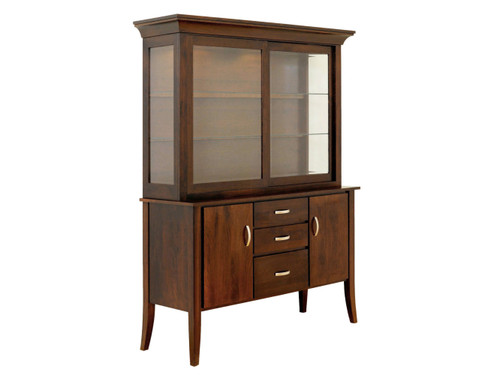
Quartersawn White Oak Furniture or Red Oak: Which Fits Your Mission Piece?
Posted by Mission Motif on Jun 3rd 2026
Choosing the right wood for a Mission or Arts and Crafts piece isn't just about looks. The species you pick shapes how your furniture ages, how it takes stain, and how much the grain stands out. If you're ordering quartersawn white oak furniture or weighing it against red oak, that decision is worth a little extra thought.
This guide covers what actually separates these two oaks, how each holds up for different furniture types, and where cherry and brown maple fit in. By the end, you'll have enough practical information to walk into a design conversation and ask the right questions.
Why This Wood Defines Arts and Crafts Furniture
Quartersawn white oak is the classic choice for Arts and Crafts work. There's just something about its figure and structure that lines up perfectly with the style's focus on honest materials and visible craftsmanship. No other species really makes the same case for showing off what wood can do.
Medullary Ray Figure and Visual Character
The big visual signature of quartersawn white oak is ray fleck. Those shimmering silver or copper streaks across the board are medullary rays, tissue that moves nutrients sideways through the tree. When sawyers quarter the log and slice perpendicular to the rings, those rays get exposed full-width, creating that almost luminous pattern. Plain-sawn oak, by comparison, barely shows the rays at all.
This isn't just decoration. In Arts and Crafts furniture, the figure comes from the wood itself, not some applied finish or veneer. Gustav Stickley built his whole reputation on letting the material speak for itself, not hiding it under paint.
Closed Grain and Surface Texture
White oak's part of a group where the pores are basically plugged up with tyloses, tiny bubble-like structures that block the open channels you see in red oak. So, the surface feels tighter and smoother. How white oak's closed pores affect surface texture explains why white oak feels more refined: the pores don't telegraph through the finish the way red oak's do.
This matters for tabletops and cases where you want a finish that looks even and doesn't have those little pores showing through. White oak also shrugs off moisture better, which is handy in humid places like Atlanta.
Why Stain Takes So Well on White Oak
Those tyloses don't just close up the pores. They help white oak take stain evenly. The finish soaks in without pooling, so you get a consistent color across big panels. That's why Stickley's Mission line uses quartersawn white oak for customers who want that deep, dimensional look with clear, hand-applied finishes.
Dark fumed finishes, a staple of the original Arts and Crafts palette, work especially well because white oak's high tannin content reacts with ammonia fuming to create those warm, brown-gray tones. Red oak just doesn't have enough tannin for this to work reliably.
Once you see how white oak behaves, the differences with red oak get a lot clearer.
How White Oak Compares With Red Oak
This isn't just a color choice. Each wood acts differently at the surface, under stain, and after years of use.
Grain Openness and Overall Appearance
Red oak's grain is more open and porous because its vessel pores aren't filled with tyloses. That creates a busier, more casual grain pattern. White oak's closed grain looks calmer, which fits the clean, horizontal lines of Mission furniture. If you want the wood to play nice with the joinery, white oak's probably the safer bet.
Ray Fleck Visibility in Finished Pieces
Both species show some ray fleck when quartersawn, but white oak's rays are wider and really catch the light. Red oak's rays are thinner and more subtle. If you're after that classic, silvery flash you see in Arts and Crafts pieces, only quartersawn white oak really delivers.
Staining Behavior Across Light and Dark Finishes
|
Property |
Quartersawn White Oak |
Red Oak |
|---|---|---|
|
Grain structure |
Closed, tyloses-filled |
Open, porous |
|
Ray fleck visibility |
Strong, wide, reflective |
Narrow, subtle |
|
Stain absorption |
Even, consistent |
Can blotch in pores |
|
Ammonia fuming |
Reacts well, high tannin |
Low tannin, unreliable |
|
Finish appearance |
Smooth, uniform color |
Grain telegraphs |
Red oak tends to blotch if you stain it without a pre-conditioner, especially on big panels. White oak's closed pores make stain more predictable and even.
Durability and Long-Term Wear
Both oaks are pretty tough: white oak clocks in at about 1,290 lbf on the Janka scale, red oak at 1,220 lbf. In everyday furniture, that's basically a wash. The real difference is stability. Quartersawn boards from either species move less with the seasons, which matters for wide tops and tall panels.
White oak's tyloses help it resist moisture, a bonus for dining tables. Knowing how each wood holds up over time helps you pick the right one for your order.
How to Match the Species to the Piece
The best wood depends on the furniture form, not just what you think looks good. Some pieces really benefit from what white oak does best; others, not so much.
Dining Tables and Everyday Use
Dining tables take a beating: moisture, heat, chairs sliding, kids banging stuff around. Quartersawn white oak's closed grain shrugs off moisture better, and its stability helps keep wide tops flat and joints tight over the years. If you want a table to last for generations, white oak's a strong choice.
Case Goods and Panel-Heavy Designs
Bookcases, sideboards, and bedroom cases have lots of big, flat panels where the grain shows off. This is where that ray fleck really shines. Wide panels from quartersawn stock show the figure consistently, making the whole piece feel intentional and unified.
- Quartersawn white oak works best for panel-heavy case goods where you want consistent figure.
- Red oak can make sense if you're watching the budget and plan to use a dark finish that tones down the grain.
- Frame-and-panel construction in either species benefits from quartersawn panels to keep movement in check.
Chairs, Beds, and Structural Demands
Chairs and beds need strong joinery more than flashy grain. Mortise-and-tenon joints in either oak hold up well. Here, the choice is mostly about matching the rest of the room; if your table's quartersawn white oak, matching the chairs keeps things cohesive.
When Budget Changes the Best Choice
Quartersawn lumber costs more because it takes extra work and wastes more wood on big orders; that adds up. Red oak, especially plain-sawn, is a reasonable pick for secondary pieces or spots where the surface won't be front and center, as long as you manage your finish expectations.
Once you know what oak can do, cherry and brown maple are worth a look for certain situations.
Where Cherry and Brown Maple Fit In
Cherry and brown maple head in a different direction from oak, but sometimes they're the right call.
When Cherry Suits a Warmer Look
Cherry's grain is subtler, with a smooth texture and a reddish-brown color that deepens over time. Cherry fits rooms with warm lighting or mixed materials where the gray-brown of fumed oak might seem cold. It also develops a natural patina, which appeals to folks who like a finish that changes with age.
When Brown Maple Makes Sense for Painted or Softer Finishes
Brown maple is tight-grained and doesn't have much figure. It's great for painted finishes, or matte looks where you don't want grain showing through. Not a common choice for Mission furniture, since that style's all about visible wood character, but it's practical for built-ins or pieces meant to blend in.
Why White Oak Still Leads for Mission Styling
Neither cherry nor brown maple gives you the ray fleck that defines Arts and Crafts furniture. Cherry is beautiful but quiet; brown maple's almost neutral. If you want the room to feel authentically Mission, quartersawn white oak is the anchor. The others are more like supporting players.
Finish Selection and Customization in Person
Picking a finish for quartersawn white oak or red oak isn't something you can do from a photo. The way stain works with the figure, grain, and your room's light changes everything. Seeing samples in person is pretty much a must.
How Stain Samples Change the Decision
A stain that looks warm on a tiny chip might go orange on a big tabletop in sunlight. Sometimes a dark sample shows off the ray fleck way more on a full panel. Checking out full-size stain boards in your chosen wood is the only way to know what you're actually getting before you order.
Why Lighting Affects Wood Selection
Your room's light, its direction, color, and intensity, changes how the figure pops. Quartersawn ray fleck is most dramatic in raking or directional light, like afternoon sun or a pendant over a table. Under soft, diffuse light, the figure's more subtle. If your main lighting is indirect, the piece will still look great, just less flashy than showroom photos.
Mission Motif and the Value of Design Guidance
Sorting out wood, stain, and finish is easier with someone who's seen it all before. At the Atlanta showroom, you can check out finished samples in person, side by side, and see how they play together in real light, not just on a screen.
When you're ready to talk wood, stain, and fabric for a custom piece, call Mission Motif at 404-370-1505. The design team can walk you through your options and help you figure out what fits your space and style.
Choosing for Longevity, Not Just First Impression
If you pick a species just for looks, you might regret it later. The best bet matches what the material can actually do with how you'll use the furniture.
What to Prioritize if You Want Heirloom Performance
Heirloom-quality starts with solid hardwood, not veneered panels, and relies on strong joinery. Mortise-and-tenon joints in solid quartersawn white oak hold up to daily stress and seasonal shifts better than dowels or staples. The closed grain also keeps the finish looking good longer, so you don't have to refinish as often.
- Go for quartersawn stock on panels and tops where movement and figure matter.
- Choose mortise-and-tenon joinery for strength in chairs, tables, and cases.
- Ask for hand-applied finishes instead of spray-lacquer for better depth and easier touch-ups.
- Make sure the piece uses solid hardwood all the way through, not just on the faces.
How to Balance Aesthetics, Use, and Cost
There's no one-size-fits-all wood for every project. Quartersawn white oak stands out for dining tables and case goods, especially when you care about figure and moisture resistance. Red oak works as a solid, more affordable pick for secondary pieces or when you're leaning into darker finishes. Cherry brings a gentle warmth and a mellow patina, great if you want something softer under the light. What really matters is how your choices line up with your room's lighting, the furniture's purpose, and your budget.
Frequently Asked Questions
These are the questions that come up again and again when folks start weighing wood species, especially for custom Arts and Crafts or Mission-style furniture.
How Can You Tell Quartersawn Stock From Plain-Sawn Boards When You Are Evaluating a Finished Piece?
Check the board's face for ray fleck: those silver or copper streaks running across the grain. On the end, quartersawn boards show growth rings almost straight up and down, while plain-sawn rings curve in an arch. Once you spot the difference, you can't unsee it.
Why Does Quartersawn White Oak Show Ray Fleck, and How Will It Look Under Different Stains and Clear Coats?
White oak's broad medullary rays catch the light when cut just right in the quartersawing process. With lighter or natural finishes, the fleck pops as a silvery-gold shimmer. Dark stains tone it down, making the figure more subtle, while clear coats let the full range of color and pattern come through.
What Construction Details Should You Expect in Well-Built Arts and Crafts Casework and Tables Made From This Species?
Look for mortise-and-tenon joinery at every leg and apron connection, and for wood-on-wood drawer boxes. No metal undermounts if you want period-correct details. Solid hardwood for drawer bottoms or backs beats thin plywood every time. Panel doors should float in their frames, so they don't split with the seasons. As how joint fit determines furniture strength confirms, strong furniture relies on the fit, not just glue.
How Does the Cost of Quartersawn Material Compare to Rift and Plain-Sawn, and What Actually Drives the Price Difference?
Quartersawn lumber costs more, mostly because the milling process wastes more of the log. Quartersawn lumber's durability and distinct ray figure push the price up. Rift-sawn sits somewhere in the middle: straight grain, less dramatic fleck, moderate price.
What Is the Best Way to Spec Cabinet Doors, Panels, or Veneers So the Grain and Ray Fleck Stay Consistent Across a Room?
Ask for panels to be book-matched or slip-matched from the same flitch, a set of boards cut in sequence from one log. This keeps the grain and fleck lining up across doors and panels. If you're ordering custom, make sure your maker offers this kind of matched-flitch selection.
What Care Routine Prevents Drying, Surface Scratches, and Water Rings on Mission-Style Tops and Other High-Use Surfaces?
Wipe up spills right away and skip setting wet glasses down without coasters. Use a paste wax or conditioner that suits the finish: oil-finished pieces need re-oiling now and then, while lacquered tops just want an occasional waxing. Try not to park your furniture right in front of HVAC vents; too much dry air can crack the surface over time.
Making Your Final Species Decision With Confidence
Quartersawn white oak really does define the Arts and Crafts look: those medullary rays, the tight grain, the way it takes stain. Red oak isn't a lesser choice, just a different one. Knowing what sets them apart helps you pick what'll actually work and look good in your space, not just what sounds familiar.
If you're furnishing a craftsman home and want pieces built by American and Amish artisans to stand the test of time, Mission Motif's design team can walk you through the options, from Arts and Crafts solid hardwood collections to stain samples you can hold. You can request a quote or swing by the Atlanta showroom at 747 Miami Circle NE if you want to see things in person.