
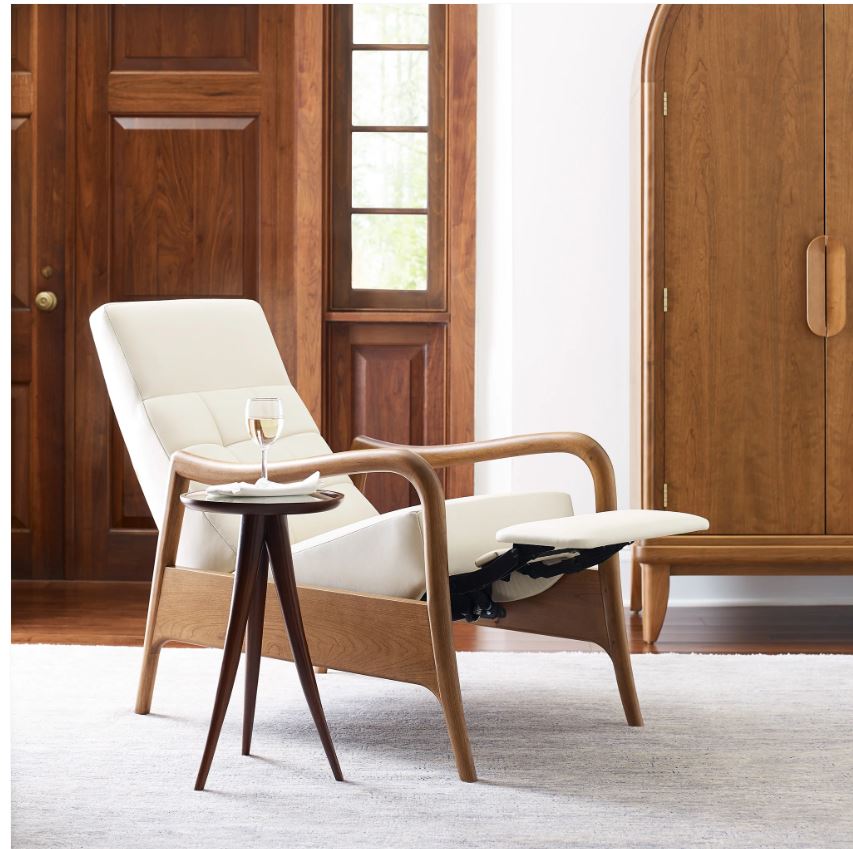
Stressless Recliner Buying Guide: Fit, Bases, and Comfort
Posted by Mission Motif on Jun 24th 2026
Picking out a Stressless® recliner? It's a bigger decision than it looks at first glance. There's a sea of sizes, bases, comfort features, and upholstery choices. If you're not sure what actually matters for your body or your room, it can be hard to know where to start. Here's a straightforward breakdown of what to look for, so you don't end up second-guessing yourself at the showroom.
Stressless recliners have been made in Norway since the early '70s, and over the years the options have multiplied. The challenge isn't finding a comfortable chair; almost all of them are. The trick is matching the right fit, base, and features to your daily life and space. Mission Motif is an authorized Stressless by Ekornes dealer in Atlanta and carries the full lineup, so you can see every configuration in person before you decide.
Choose the Right Fit First
Fit is everything. If the size is off, the lumbar support won't land where it should, the headrest will be awkward, and the ergonomics just won't click.
How Small, Medium, Large, and X-Large Change the Feel
Stressless chairs come in four main sizes: Small, Medium, Large, and X-Large. Size impacts seat depth, seat width, backrest height, and where the headrest hits your neck.
Roughly, Small works for folks around 5'0" to 5'4", Medium fits 5'4" to 5'10", and Large or X-Large suit taller or broader frames. That's just a starting point. The seat depth also changes. If it's too deep, your feet dangle or your back arches off the lumbar support. Too shallow and you feel perched.
Don't go too big. Many people do, and it throws off the lumbar and headrest so badly that the chair feels wrong in ways you can't quite fix.
How to Judge Fit by Body Type, Lumbar Support, and Head Position
When you sit down, your lower back should nestle into the lumbar area without you having to scoot or slouch. The headrest should cradle the base of your skull, not jab your upper back.
Check three contact points before deciding on a size:
- Lower back: rests naturally against the lumbar curve without scooching forward
- Thighs: seat supports them fully without pressing into the backs of your knees
- Neck: headrest cradles the base of your skull, not your upper back
If you feel supported at all three, you're in the right size. Your feet should also rest flat, or comfortably on the ottoman, without your pelvis tucking awkwardly.
Don't just go by height. Someone 5'8" with a long torso might need a Large, even if the chart says Medium. Torso length and shoulder width matter.
Why In-Person Sitting Matters More Than Height Alone
Charts give you a ballpark, but they can't predict your proportions or posture habits. Take five or ten minutes in the chair, not just a quick sit. You'll notice pretty fast if the lumbar feels off or the headrest is too high.
Plenty of people who order by the chart alone end up swapping sizes later. The fit is precise enough that even a half-size feels "off" after a while. If you're between sizes, test both.
Compare Base Styles by Look and Movement
The base changes both how the chair looks and how it moves. Some bases keep the chair steady and rooted, others feel lighter and let you swivel or shift more freely.
|
Base Style |
Profile |
Movement |
Best For |
|---|---|---|---|
|
Classic |
Low, four-leg wood frame |
Reclines in place |
Traditional, craftsman, Arts and Crafts rooms |
|
Signature |
Open, elevated |
Slightly floaty recline |
Scandinavian and light modern interiors |
|
Star |
Five-point swivel, metal or wood |
360° rotation |
Contemporary and mixed-style rooms |
Classic Base for a Traditional, Steady Profile
The classic base sits low on a wooden frame with four legs, solid and close to the ground, and a bit more traditional. It doesn't roll or move around; the recline stays within the base's footprint.
If your room has lots of solid wood or craftsman-style furniture, this base blends in without trying too hard. It looks more like furniture, less like a gadget. You can browse classic Stressless base options to see what's available.
Signature Base for a Lighter, More Modern Look
The signature base is more open and a bit higher off the floor. You'll see more of your rug or floor, and the whole chair feels less visually heavy.
If you're leaning toward a Scandinavian vibe, this base plays along. The recline feels a bit more "floaty," and it just looks lighter in the space.
Star Base and Ottoman Setups in Different Room Styles
The star base gives you a five-pointed swivel, either in metal or wood. You can spin the chair 360 degrees, which is handy if you want to face the TV, the window, or chat with someone across the room.
It's a bit more modern-looking. If you're mixing styles, think about whether that works for your space. Pairing it with a matching ottoman keeps things coordinated, and you can move the ottoman around as needed.
How a Matching Ottoman Affects Comfort and Visual Scale
A matching ottoman lets you stretch out and takes pressure off your legs. It really does make a difference if you like to put your feet up.
Just remember, the ottoman adds to the footprint. In a smaller room, the star or signature base with a single ottoman tends to feel more balanced. The classic base can dominate a tight floor plan.
Understand How the Comfort Systems Work
Stressless chairs aren't just soft seats. They use a few clever systems that adjust as you move, depending on the model.
What the Plus™ System Does for Neck and Back Support
The Plus™ system links the headrest and lumbar support so both adjust together as you recline. When you lean back, the headrest and lumbar shift to keep your neck and lower back supported.
You don't have to fuss with the headrest every time you move. The support just follows you. This is one of the main things that sets Stressless apart from recliners that stay fixed no matter how you sit.
How the Glide System Responds to Your Weight Shift
The glide system lets the seat move forward as you recline. Instead of the backrest tilting away while you stay put, your whole body shifts in sync with the chair.
This makes it easier to get in and out, and you don't feel shoved into the seat. The glide adjusts to your weight. No levers, no buttons.
Where BalanceAdapt Fits Into the Seating Experience
BalanceAdapt, found in some models, lets the seat tilt slightly as you shift your weight. It's just a few degrees, but it keeps your core engaged and helps avoid that stiff, locked-in feeling after long sessions.
If you spend hours in your chair, reading, watching TV, even working, this feature can make a real difference. Check if the model you're eyeing includes it or if you'd need to upgrade.
Power vs. Classic Recline Mechanisms
Manual or power recline? It really comes down to how you want to use the chair and what you're willing to maintain over the years.
When a Manual Recliner Makes More Sense
Manual recliners use your own body weight to adjust. No motors, no cords, no remotes to misplace. They're quick to respond, and there's less to break down.
If you don't have mobility issues, manual is usually the simpler, more durable route. After a couple of uses, it feels second nature.
When Power Features Add Useful Everyday Ease
Power recline shines if you have limited mobility, prefer effortless adjustments, or share the chair with people who like different angles. You can fine-tune your position with just a button. Some models let you adjust the headrest separately, which is genuinely handy if you switch between reading and watching TV.
Reliability, Maintenance, and Long-Term Ownership Trade-Offs
Power mechanisms mean motors, wiring, maybe a battery or cord. These parts are well made, but they do add possible maintenance over the years.
If you're thinking of this as a decades-long investment, ask about replacement parts and whether your dealer can service the chair. It's worth a quick question before you buy.
Pick Upholstery for Comfort, Durability, and Room Style
Upholstery isn't just about looks; it changes how the chair feels, how it wears, and how it fits with the rest of your space. You'll find full-grain leather, protected leathers, fabric, and faux options, each with real pros and cons.
Leather Recliner Options and What They Feel Like Day to Day
Full-grain or semi-aniline leather starts out a bit firm and cool, but it warms up quickly and softens with use, gaining character over time. Protected leathers resist stains and wipe clean easily, so they're practical for high-traffic rooms.
If your space has warm woods or a craftsman feel, leathers in saddle, cognac, or tobacco tones usually blend right in.
When Fabric May Suit the Room Better
Fabric feels soft right away and doesn't get chilly in winter or sticky in summer. It also breathes better, worth considering if you live in a hot climate.
Fabric's great in rooms with other textiles, like linen or wool. Just check the weave and grade before you order. Lighter weaves can show wear faster, especially if you use the chair daily.
How to Think About Faux Leather Recliner Alternatives
Faux leather costs less and can look convincing at a glance, but it doesn't age as well. Over time, it's more likely to crack or peel, especially at stress points.
If you're on a budget, a mid-range fabric often holds up better than faux leather and costs about the same. Genuine leather's a bigger upfront spend, but it usually outlasts the alternatives by years.
Compare Stressless Recliner Models and Plan the Investment
There's a wide range of Stressless models out there, each with its own silhouette and features. The key is understanding what sets the most popular ones apart, so you can narrow down your shortlist.
How Stressless Mayfair, Stressless Sunrise, and Stressless Consul Differ
The Mayfair stands out for its broad, flat wooden arms and wider seat. It leans traditional and works beautifully in craftsman or Arts and Crafts rooms, especially with visible wood grain.
The Sunrise is softer and rounder, with padded arms and a more enveloping seat. It's available with BalanceAdapt and feels extra cushy, a good pick if you prefer a plush sit.
The Consul is more compact and upright, with a cleaner, less bulky look. It's a smart pick for tighter spaces or if you want a chair that doesn't dominate the room.
Where Stressless Reno Fits in the Lineup
The Reno is lower-backed and sleeker, with a more contemporary feel than the others. It skips the winged or high-back look and feels at home in minimalist or Scandinavian-style rooms.
If you want the comfort systems without the visual heft of a classic recliner, Reno's worth a look.
What Price Range to Expect and What Drives Cost
Stressless recliners represent a meaningful investment, and the price range shifts significantly depending on model, size, base, upholstery, and power features. For exact pricing, a call or showroom visit is the clearest path.
Base style matters too: wood bases in walnut or oak usually cost more than the standard options. When you're comparing, break down the base, upholstery, and mechanisms to see where the price differences really come from.
Trying Multiple Configurations Before You Order
Ordering a Stressless recliner without actually sitting in your preferred size and base is, honestly, the fastest way to end up disappointed. Specs and charts just don't capture the difference between, say, a Medium and a Large, or how a classic base feels compared to a star base.
If you're around Atlanta, you can try out Stressless by Ekornes in person at Mission Motif's showroom. Swing by, call 404-370-1505, or just drop in and get a feel for several setups before you commit.
Frequently Asked Questions
How do I choose the right Stressless recliner model for my body type and seating preferences?
Start with size. Your lower back should naturally rest against the lumbar area without you having to scoot or slouch. The headrest should cradle the base of your skull, not jab your upper back.
After that, think about armrest style, seat depth, and whether you want a chair that hugs you or one that keeps you more upright.
What are the key differences between Stressless recliner sizes, and how do I use the size chart to pick the right fit?
The size chart gives you a decent starting point, but it's just a starting point. Torso length, shoulder width, and leg length all play a role. Narrow it down to one or two sizes, then actually sit in them if you can. Check lumbar support, headrest position, and make sure your thighs are supported without the seat edge pressing into your knees.
Which features should I compare across Stressless recliners (manual vs power, base styles, headrest and lumbar support)?
Focus on the recline mechanism (manual or power), the base style, and whether the model includes the Plus™ system, the glide system, or BalanceAdapt. These features have the biggest impact on how the chair feels day after day.
What common problems do owners report with Stressless chairs, and what should I check before buying?
The most common complaints: wrong size selection, wear on lower-grade leathers at flex points, and occasional motor or wiring issues in power models after a few years. Before you buy, double-check the return and exchange policy and ask about parts availability for power components.
Where can I find the best price on a Stressless recliner, and when do sales typically happen?
Pricing doesn't vary much among authorized dealers, and big markdowns on current models are rare. Occasionally, you'll see promotions tied to seasonal events, or when new models come in, so that's your best shot at a deal. Buying through an authorized dealer also keeps your warranty intact, though that coverage won't transfer if you go through a secondary market.
Is buying a Stressless chair from a big-box retailer a good option compared to an authorized dealer?
Big-box stores sometimes stock a few Stressless models, but the selection is limited. You usually won't find the full range of sizes, bases, or upholstery options, and they rarely help with in-person fitting. Warranty terms might not match what you'd get elsewhere, either. For something you'll use every day, it just makes sense to go through an authorized Ekornes dealer and get the full experience.
Make the Right Call Before You Order
Picking a Stressless recliner really boils down to four choices: size, base style, comfort system, and upholstery. Nail the size first; everything else is easier from there.
It's not the kind of chair you want to gamble on and hope for the best when it shows up. The fit is everything. If it's wrong, you'll notice right away.
Mission Motif's Atlanta showroom carries Stressless by Ekornes, where you can try different models and get guidance on size, base, and upholstery. Visit at 747 Miami Circle NE or call 404-370-1505 to work through every option before you order.