
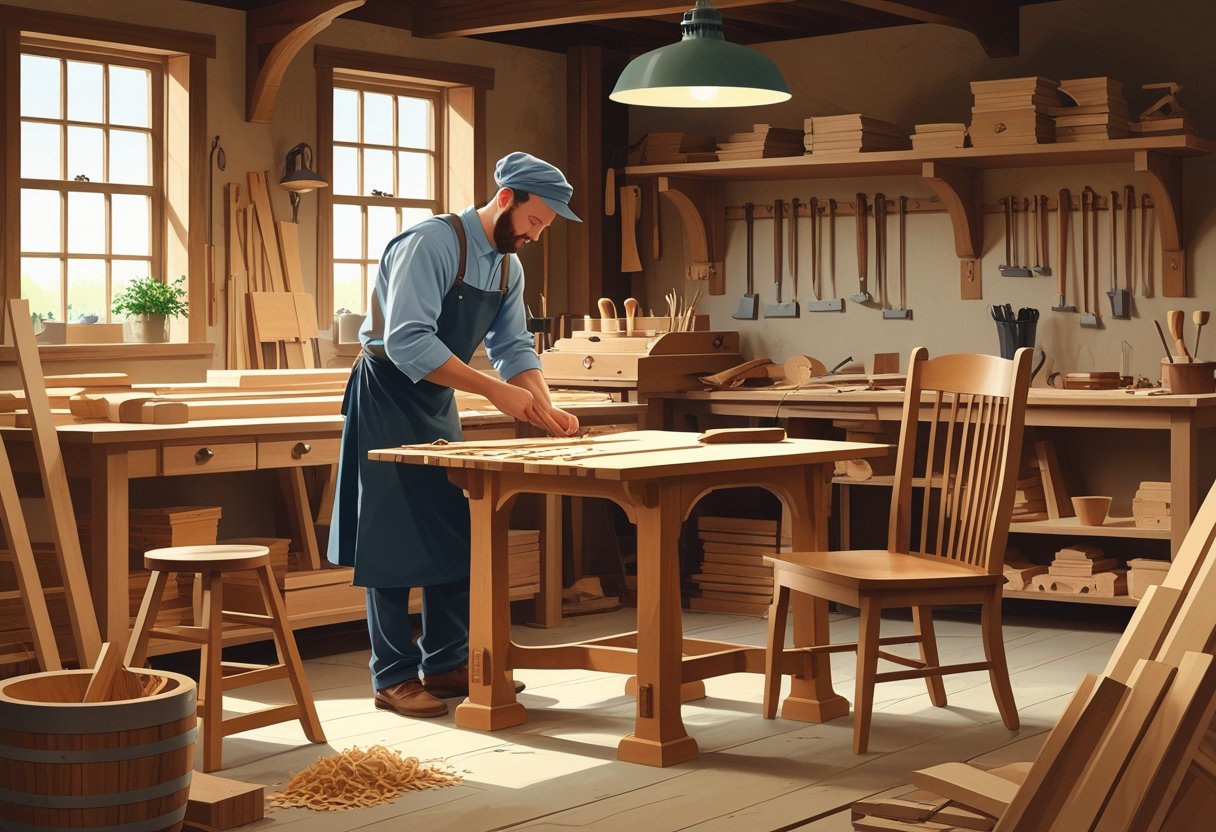
Why Is Amish Furniture So Expensive? Understanding Quality and Craftsmanship
Posted by Mission Motif on Dec 2nd 2025
When you explore Amish furniture, you’ll quickly see why it costs more than most modern options. Each piece represents skilled craftsmanship, natural materials, and techniques perfected over generations. These elements combine to create heirloom-quality furniture that endures far beyond typical household use.
At The Mission Motif, we appreciate how Amish artisans uphold the same principles found in Mission and Arts & Crafts design—integrity, simplicity, and durability. Their dedication to handcraftsmanship turns furniture into lasting works of art that enrich your home and honor American heritage.
In this guide, you’ll learn why Amish furniture commands a higher price, what defines its quality, and how craftsmanship, sustainability, and heritage come together to make each piece truly worth the investment.
Handcrafted Quality
Amish furniture stands out because of the time and skill invested in making each piece. From the raw materials to the fine details, every step focuses on lasting value and strong construction.
The Arts & Crafts Philosophy Behind Amish Furniture
Amish furniture carries the spirit of the Arts & Crafts movement, which championed simplicity, function, and integrity in design. According to Smithsonian Magazine, this movement valued honest workmanship and natural materials, rejecting mass production in favor of handcrafted quality.
Amish artisans continue this legacy today, focusing on form, purpose, and timeless design that connects craftsmanship with heritage.
Skilled Amish Craftsmanship
Highly trained Amish craftsmen build each item by hand, spending days or even weeks on a single piece. Their skills come from years of experience and learning traditional woodworking techniques.
They carefully make each piece to meet high standards, resulting in furniture that is both beautiful and built to last. The time spent on handcrafted work adds to the price but ensures the durability you won’t find in mass-produced furniture.
Superior Attention to Detail
Attention to detail makes Amish furniture valuable. You will notice smooth finishes, precise cuts, and uniform surfaces. These features result from slow, careful work, not rushed machine production.
Important touches, such as perfectly aligned drawer joints or hand-rubbed stain, add to the overall quality. This care extends to every corner, helping the furniture age well and keep its appearance for years.
Traditional Joinery Techniques
Traditional joinery methods, like dovetail joints, mortise and tenon, and dowel construction, give your furniture strength. These techniques lock wood pieces together without nails or screws.
Using these methods, craftsmen create stable, wear-resistant furniture. The construction not only makes each piece sturdy but also showcases the skill behind the build.
Premium Materials Used
The quality of materials plays a critical role in why Amish furniture costs more. You get carefully selected hardwood, responsibly sourced materials, and lasting durability that few other furniture makers offer. These choices impact how your furniture looks, performs, and lasts over time.
Solid Hardwood Selection
Craftsmen use solid hardwoods like oak, maple, cherry, hickory, and walnut, known for their strength and natural beauty. Unlike cheap furniture that uses particleboard or MDF with veneer, solid wood provides a genuine and rich finish that improves with age.
They craft each piece from carefully chosen boards with tight grains and minimal flaws, ensuring structural soundness and visual appeal. The hardness of these woods also means your furniture resists dents and scratches better than softer or engineered materials.
Sustainable Sourcing Practices
Amish craftsmen use wood from responsibly managed forests, reducing waste and limiting environmental impact. They avoid fast-growing, low-quality wood and choose hardwood harvested with care, supporting forest health and long-term availability.
Sourcing locally or within the United States reduces transportation emissions and ensures higher material standards. When you invest in Amish furniture, you support a supply method that favors environmental responsibility alongside quality.
Material Longevity and Durability
Amish furniture lasts for decades, often becoming a family heirloom, thanks to solid hardwood and expert joinery techniques. The strong wood and traditional construction withstand daily use better than mass-produced pieces.
Mortise-and-tenon and dovetail joints, rather than just nails, enhance stability. Durable finishes protect the wood from moisture and wear, ensuring your furniture ages gracefully and remains functional for years.
Labor-Intensive Production Process
Amish furniture takes a long time to create because craftsmen make each piece by hand. You will notice the difference in quality and attention to detail, reflecting hours of skilled work without shortcuts. This process avoids machines and mass production, making every item unique and strong.
Time Commitment per Piece
Each piece often requires many hours or even days to complete. Craftspeople cut, shape, and assemble the hardwoods by hand, ensuring that joints fit perfectly and surfaces are smooth.
Manual work includes sanding, staining, and finishing with natural products to bring out the wood’s character. This lengthy process results in a solid build and long-lasting beauty.
Absence of Mass Production
Amish craftsmen make furniture by hand, not on assembly lines. They avoid plastic, veneers, and quick fixes, focusing on quality, not quantity.
This small-scale production means each item takes extra time, with better control over details and materials. As a result, you receive furniture built to last generations, with a look and feel that mass-produced pieces cannot match.
Customization and Made-to-Order Options
Amish furniture stands apart because craftsmen design it specifically for your needs, not in bulk. You control key details like wood finish and design style, ensuring the piece fits your home and reflects your taste.
Personalized Wood Finishes
You can choose from a variety of wood types, such as cherry, oak, maple, or walnut. Each species offers a distinct grain pattern and color, affecting the furniture’s look and feel.
You also select the stain or finish. Whether you prefer a rich dark tone or a lighter natural shade, the furniture is treated to highlight its beauty and protect it for years. This personalization ensures your furniture blends seamlessly with your decor.
Unique Design Requests
Your furniture can match specific dimensions, making it ideal for unusual room sizes or tight spaces. Amish makers adapt the shape, style, or functional features based on your requests.
From selecting hardware to adding carvings or special joinery, you influence the design details. This freedom makes your furniture one-of-a-kind and reflective of your personality.
Limited Supply and Availability
Amish furniture availability is limited by how much can be made and where it is sold. This restricts the number of pieces you find in stores or online and influences the prices you encounter.
Small-Scale Workshop Output
Small workshops, not large factories, produce Amish furniture. Craftsmen work by hand, focusing on quality over quantity, so each piece takes time and skill to complete.
Because of this, the total supply is limited. Workshops do not mass-produce items, so there are fewer pieces available compared to factory-made furniture. This exclusivity supports higher prices and ensures careful attention to each piece.
Regional Distribution Constraints
Most Amish furniture is sold near Amish communities or through select dealers, not in large retail chains. You may need to travel or shop at specialty stores to find genuine Amish pieces.
This regional focus restricts supply further. Shipping handmade furniture over long distances is costly and fragile. Dealers keep stock limited to protect quality and avoid damage, so availability stays low and affects the cost you pay.
Supporting Amish Communities
Buying Amish furniture means more than owning a quality piece. You help maintain practices that respect people and tradition. The work is fair and honors time-tested ways of life, which many families still follow today.
Ethical Labor Practices
When you purchase Amish furniture, you support skilled workers who receive fair pay. Craftsmen use their hands and simple tools rather than machines, so the work takes longer, but hands-on care ensures quality.
The Amish avoid mass production and treat labor with respect. Your purchase supports honest work, sustaining families and communities without exploiting workers.
Traditional Lifestyles Preservation
Amish furniture is rooted in customs passed down for generations. By choosing these pieces, you help preserve a way of life that values simplicity and community. These traditions guide not just furniture making but daily life in Amish communities.
This support helps keep the Amish way alive despite modern pressures. Their focus on family, faith, and hard work remains strong because demand for their craftsmanship continues.
Long-Term Value Proposition
When you invest in Amish furniture, you choose pieces built to last for decades, even generations. The high-quality solid hardwood and expert craftsmanship help your furniture resist wear and damage better than mass-produced options.
Durability is key. Unlike particleboard or laminate, Amish furniture maintains its strength and appearance over time. This gives you a lasting, reliable piece instead of one that needs replacing after a few years.
You also gain timeless style with Amish pieces. Rooted in the Arts & Crafts tradition, this furniture fits many décor styles and seldom feels outdated. Your investment stays relevant and beautiful in your home.
Another benefit is the retained value. Amish furniture often holds or even increases in worth, especially when well cared for. This contrasts with most furniture, which loses value quickly after purchase.
Your purchase supports sustainable, handcrafted production. Each piece is individually made, so you get customization options that align with your style and space needs.
|
Benefit |
What It Means for You |
|
Solid hardwood |
Strong, long-lasting furniture |
|
Expert craftsmanship |
Quality construction with attention to detail |
|
Timeless design |
Furniture that complements your home for years |
|
Retained value |
Smart investment with potential resale value |
|
Customization |
Pieces tailored to your unique taste |
By choosing Amish furniture, you invest in more than just a product—you secure a functional, beautiful heirloom for your home.
Comparison To Mass-Produced Furniture
When you compare Amish furniture to mass-produced pieces, you notice key differences in materials and construction. Amish furniture uses solid hardwood, often sourced and crafted in the USA.
This gives it strength and durability, unlike mass-produced furniture, which often uses veneers, particleboard, or softer woods.
Craftsmanship plays a major role. Amish artisans handcraft each piece using traditional joinery techniques like dovetail and mortise-and-tenon joints. These methods take time but create furniture that can last for decades or even generations. In contrast, mass-produced furniture relies on fast assembly and cheaper materials, so it wears out quickly.
The cost difference reflects these quality factors. Mass-produced furniture may seem less expensive at first, but you may need to replace or repair it often. Amish furniture typically keeps its value over time and can become a family heirloom.
|
Feature |
Amish Furniture |
Mass-Produced Furniture |
|
Materials |
Solid hardwood, durable |
Veneer, particleboard, mixed woods |
|
Construction |
Handcrafted joinery |
Machine assembly, fast fixes |
|
Longevity |
Decades, heirloom quality |
A few years ago, disposable |
|
Value Retention |
Maintains or appreciates |
Loses value quickly |
Choosing Amish furniture means investing in something built to last through your busy life and changing tastes. You get a piece designed for both beauty and lasting use.
Timeless Craftsmanship Worth the Investment
Amish furniture costs more because it delivers enduring value. Every handcrafted piece reflects the patience, skill, and integrity of artisans who treat woodworking as an art form. The result is furniture that grows more beautiful and meaningful with age.
Like Amish craftsmen, The Mission Motif believes that true value comes from quality built to last. The investment you make in Amish furniture reflects respect for craftsmanship and design authenticity that stand the test of time.
To experience the timeless beauty of Mission and Arts & Crafts design firsthand, visit our Atlanta showroom and see how authentic craftsmanship can bring warmth and integrity into your home.
Frequently Asked Questions
What are the key characteristics of Amish furniture that ensure its longevity?
Amish furniture uses solid hardwoods such as cherry, oak, maple, and hickory. Each piece features sturdy joinery and hand-finished details that provide exceptional strength. The craftsmanship and careful finishing help ensure the furniture remains durable and beautiful for generations.
How does the construction of Amish pieces contribute to their durability?
Each Amish furniture piece is handcrafted using time-honored joinery methods such as dovetail and mortise-and-tenon joints. These techniques create exceptionally strong connections without relying on nails or screws, allowing the furniture to withstand years of daily use.
Are there specific maintenance tips to preserve Amish furniture over time?
To keep Amish furniture in top condition, dust it regularly with a soft cloth and avoid harsh chemicals. Maintain consistent indoor humidity to prevent cracking or warping. Occasionally, apply a natural beeswax or wood conditioner to nourish and protect the finish.
Can Amish furniture be considered a good investment in terms of lasting value?
Yes. Because of its solid hardwood construction and traditional craftsmanship, Amish furniture retains its value over time. Well-maintained pieces often become family heirlooms, and some can even appreciate in worth as demand for authentic craftsmanship grows.
How does the material quality of Amish furniture affect its lifespan?
Amish furniture is made from premium hardwoods that resist damage and age beautifully. Instead of fading or cracking, the wood develops a rich patina that enhances its natural character, ensuring the furniture grows more appealing with time.
What is the historical track record of Amish furniture's durability?
For generations, Amish craftsmen have built furniture that lasts decades. Many families still use pieces made by earlier generations, proving the long-term durability and integrity of Amish workmanship.